 Albania
 Bosnia and Herzegovina
 Bulgaria
 Croatia
 Cyprus
 Montenegro
 Czech Republic
 Denmark
 Estonia
 Spain
 Kosovo
 Lithuania
 Latvia
 Luxembourg
 Macedonia
 Germany
 Poland
 Portugal
 Romania
 Serbia
 Slovakia
 Slovenia
 Switzerland
 Sweden
 Turkey
 Hungary
 United Kingdom
 Italy
 UAE
 Hong Kong
 Kuwait
 Lebanon
 South Africa


Pregnant women's
zone
Contact with smallpox during pregnancy most often affects women caring for older children infected with the disease. Fortunately, due to the immunity produced in the past in a mother who has undergone smallpox or been vaccinated, infection during pregnancy is rare.
What does smallpox look like in pregnant women? Symptoms, course of disease
Smallpox in pregnant women is characterized by a severe course. Infection occurs via the droplet route when an infected person in close proximity sneezes or coughs. Contact with smallpox during pregnancy usually affects women caring for children. If they become infected, they can pass the pathogen across the placenta. Fortunately, this type of situation is relatively rare due to the immunity produced in the mother after passing a disease in the past or as a result of vaccination. Smallpox during pregnancy initially manifests as fever, general weakness, elevated body temperature, headache and abdominal pain. After 2-3 days, there are flare-ups of an itchy rash on the face and torso and extremities. The skin lesions evolve from macules, through papules from a few millimeters to 1 centimeter in diameter, vesicles, pustules and scabs. Skin eruptions tend to dry up and absorb, but often leave behind discoloration and scarring. Once a woman has survived an attack of the virus, it remains in her body in a lethal, or dormant, state for the rest of her life. Reactivation can occur in the form of hemiplegia and manifest itself in the affected dermatome (an area of skin, sensory supplied by a specific spinal nerve).

Is smallpox dangerous in pregnancy? Complications, prognosis
Smallpox in pregnancy is usually associated with dangerous complications for both the woman and the unborn child. Depending on the trimester, it can cause different complications. The mother-to-be most often experiences pneumonia, while the consequences for the baby can be more dangerous. Smallpox in the first trimester is particularly dangerous, and can even lead to the death of the embryo. The virus also poses the risk of a variety of malformations and disorders most often involving the nervous system, limb deformities, skin scarring or visual defects. Equally dangerous is smallpox during pregnancy just before termination and during the postpartum and lactation periods. It then poses a risk of transmitting the virus to the child, but also manifests more dangerous symptoms than usual, such as shortness of breath, coughing, post-rash scarring, susceptibility to bacterial infections and even sepsis, meningitis, thrombocytopenia or nephritis and hepatitis.
Treatment of smallpox in pregnancy
Smallpox in pregnancy requires immediate treatment. Treatment of the disease is determined by the trimester in which the infection occurred. First of all, pharmacological treatment of the pregnant mother with antiviral preparations that inhibit the multiplication of the pathogen is recommended, including in the situation of perinatal infection. In the case of infection in the last trimester, immunoglobulins targeting chickenpox and shingles are administered to the newborn. Topical antihistamines are recommended for itching and skin lesions, as well as baths with potassium permanganate or baking soda. Preventive therapy is also given to high-risk women, i.e. ladies who are in contact with a sick person, did not go through smallpox in childhood and were not vaccinated against it. In the case of a disease such as smallpox, treatment is provided in an outpatient setting. Hospitalization is necessary only if additional symptoms appear, such as from the respiratory and digestive systems, spotting or bleeding from the genital tract.

Smallpox in pregnant women – symptoms, treatment, prognosis
Smallpox in pregnancy is associated with a more severe course than in other women, and transmission of the viral infection across the placenta poses a high risk of serious complications, including death of the unborn child. Prognosis depends on the trimester, time of initiation and complexity of therapy.
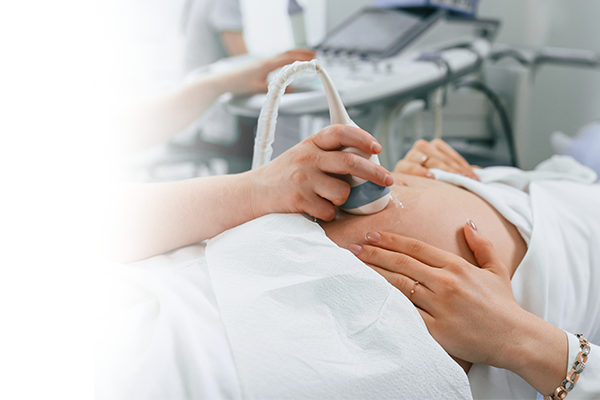
What is an anterior placenta? Does it pose a risk to the child?
Placenta previa is diagnosed in approx. 1% of pregnant women. This complication is the most common cause of reproductive tract bleeding. Abnormalities can be diagnosed by ultrasound. The management of placenta previa depends on the age of the pregnancy and the severity of the symptoms.

Biochemical pregnancy – characteristics, symptoms and causes of early embryo miscarriage
A biochemical pregnancy is one that is lost at the stage of implantation of the embryo in the uterus. A number of factors contribute to its formation, including. developmental defects, surgical scars or physical exertion. A woman can be pregnant like this without even knowing it. If she does not take a pregnancy test, she may be convinced that it was a temporary delay of her period.

What is a serological conflict? When does it occur and what are its effects?
A mother and her child do not always have the same blood type. This situation can lead to an abnormal immune response, or what is known as an "abnormal immune response. serological conflict. This is a phenomenon that not infrequently proves dangerous for the fetus, especially in the second pregnancy. What are the symptoms, effects and causes of serological conflict? We explain.

Cervix in pregnancy. What should a mother-to-be know about her evolution?
The cervix in early pregnancy undergoes changes mainly in terms of accessibility to the external environment. After fertilization, its outlet is closed by the so-called "mouth". Mucus suppository, which protects the fetus from external factors. Such a condition in a normal pregnancy should persist until delivery.

What does perineal pain in pregnancy mean? How can it be dealt with?
Perineal pain in pregnancy occurs most often in the third trimester, close to the time of delivery. It is associated with the relaxation of ligaments under the influence of relaxin. Women usually feel it when walking or sitting for long periods of time. Perineal pain during pregnancy is worth mentioning to your gynecologist.
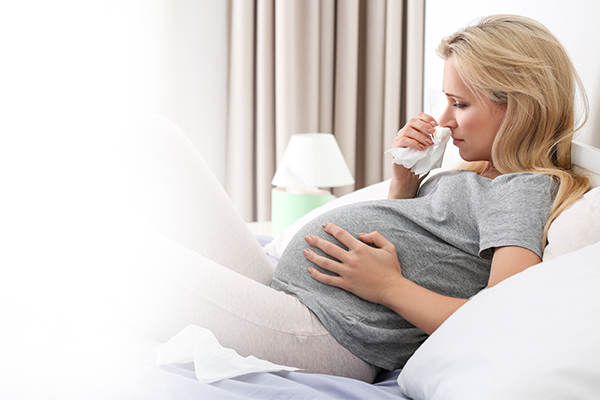
Catarrh in pregnancy – how to get rid of a persistent ailment?
Hormonal changes in a pregnant woman's body make her more susceptible to infections and more. Circulating allergens in the air can also be the bane of a mother-to-be, and their first symptom is usually a runny nose. A persistent ailment acquired during pregnancy can be a real nuisance, especially since the use of drugs is severely restricted during this period.

Discharges during pregnancy – characteristics and causes
Urination at the beginning of pregnancy, as well as in the following months of pregnancy, is not unusual and should not cause concern for mothers-to-be. They protect the internal female reproductive tract and the developing fetus from infections. Physiologically, mucus is in moderate quantity, whitish-transparent, odorless and of uniform consistency.

What are the causes of insomnia during pregnancy? Medications and home remedies for sleepless nights during pregnancy
Insomnia during pregnancy is reported by more than half of women. Difficulties in sleeping are related to the changes that occur in the pregnant woman's body. These ailments significantly contribute to the deterioration of well-being. Home remedies are recommended for insomnia in pregnancy.
Rest, stress reduction and healthy sleep are important for a pregnant woman. Rest allows the body to regenerate, rebuild energy resources, regulate metabolism, and positively affect the well-being of the mother-to-be and the development of the fetus. Unfortunately, hormonal changes during pregnancy cause most women to report sleepless nights during pregnancy. Their effects are felt primarily during the day, so every pregnant woman should know how to deal with insomnia.
Pregnancy and insomnia
According to data collected by the U.S. National Sleep Foundation, insomnia during pregnancy and deterioration in sleep quality are reported by 75% of women. The problem is most often observed in the third trimester, but the percentage of cases is only slightly higher than at other stages of pregnancy.
Insomnia in pregnancy manifests itself in various ways. Most women report waking up from sleep and having difficulty falling asleep again, as well as waking up early in the morning. In some pregnant women, the time between going to bed and falling asleep also increases significantly.
The effects of insomnia in pregnancy are felt throughout the day. Lack of sleep primarily affects the nervous system. The woman notices in herself difficulties in concentration, a decrease in energy, lack of motivation, excessive sleepiness, weakness. Prolonged insomnia at night can lead to weakened immunity, mood disorders and complications during labor.
Causes of insomnia in early pregnancy
At the beginning of pregnancy, insomnia is associated with hormonal changes that occur intensely after conception. The increase in pregnancy hormones (mainly estrogen) affects the phases of sleep: REM is lengthened and NREM, which is responsible for resting the body, is shortened. While a pregnant woman may wake up during the night, she has no problems falling asleep. Insomnia in the first trimester of pregnancy causes a feeling of constant fatigue during the day.
Insomnia in the second trimester of pregnancy
Insomnia in the second trimester of pregnancy manifests itself mainly in problems with falling asleep. Its causes are changes in a woman’s body – a gradual increase in the circumference of the abdomen, a change in the position of internal organs in the abdominal cavity, as well as pregnancy complaints: back pain, breast tenderness, difficulty breathing and painful calf cramps. It is often the case that women who suffered from insomnia at the beginning of pregnancy cease to experience it in the second trimester.

Insomnia in the third trimester of pregnancy
Most pregnant women report insomnia in the third trimester of pregnancy. It is mainly related to increasing pregnancy discomforts and the difficulty in finding a suitable sleeping position due to a large belly and back pain. Other causes of insomnia in pregnancy include:
- The need to urinate frequently due to pressure of the uterus on the bladder,
- breathing problems,
- Intense fetal movements,
- Predictive cramps.
Insomnia at the end of pregnancy can be caused by stress from the upcoming delivery.
Ways to get insomnia during pregnancy
Insomnia during pregnancy can be a very troublesome problem. If it happens often and impedes daily activities, a woman should see a doctor. It is forbidden to take any drugs on your own. Pregnancy drugs for insomnia can adversely affect the development of the fetus, so home remedies are advisable first of all:
- Limiting naps during the day,
- taking care of the climate in the bedroom (airing the room, silence, no light, comfortable mattress),
- Use of relaxation techniques,
- Falling asleep and waking up at consistent times,
- aromatherapy.
It is also recommended to drink infusions of herbs (lemon balm, linden flower) half an hour before bedtime.
See also: How to deal with postpartum depression will be in England?